
Bats and Your Development: Why the Clock Starts Before the Drawings Do
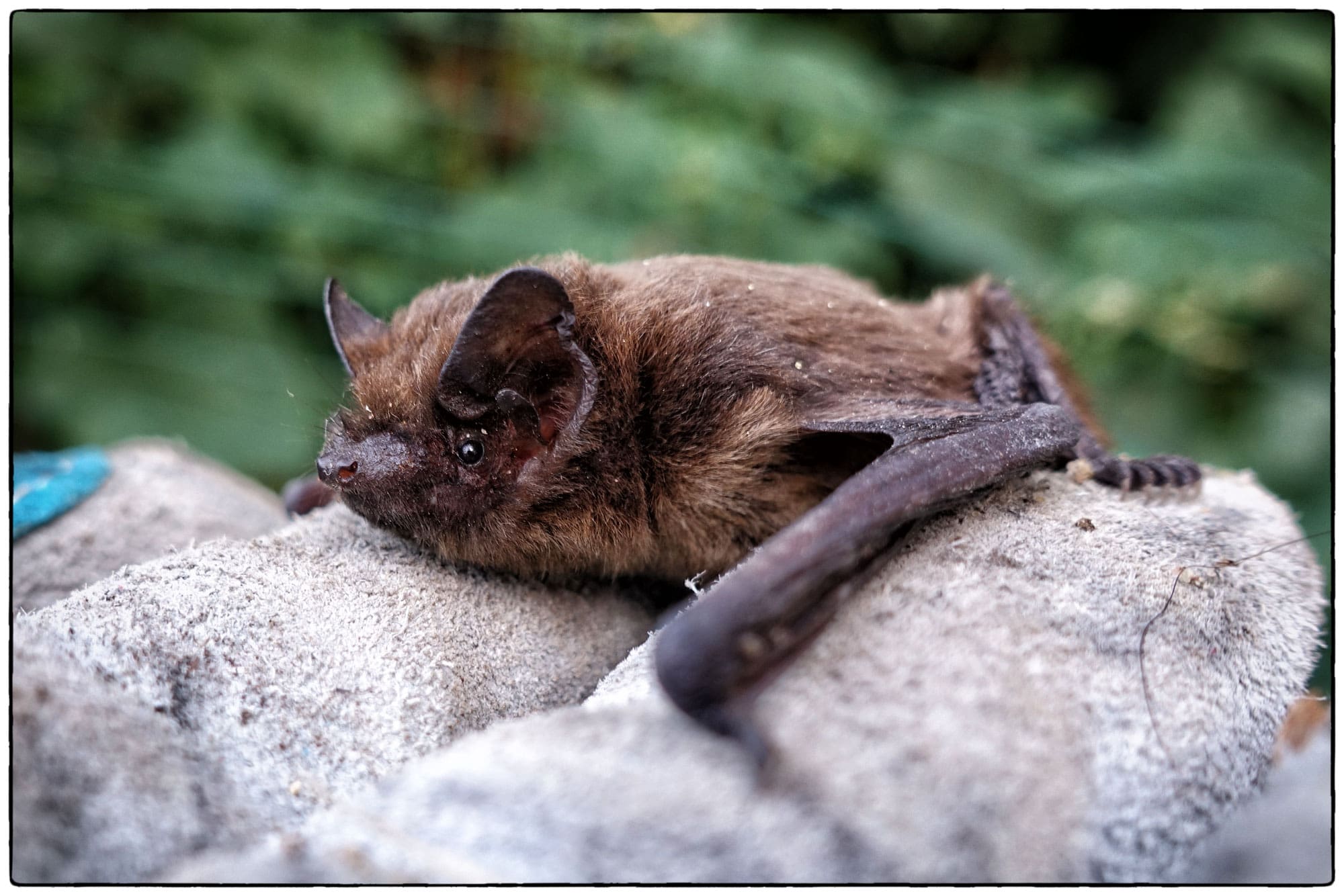
If you own, manage or are developing a site in Ireland, bats are one of the few ecological constraints that can quietly reshape your programme. This is not because they are difficult to accommodate, but because the work needed to assess them is tied to the seasons. Get the timing right and bat surveys are a routine, low-drama part of your ecological workflow. Get it wrong and you can lose the guts of a year waiting for the next survey window.
This post walks through the two stages of bat assessment most developments encounter, namely the preliminary assessment and the full activity survey, and explains why the single most valuable thing you can do is commission the preliminary assessment early, as part of your Preliminary Ecological Appraisal (PEA), before your design is fixed.
The Legal Background
All nine bat species resident in Ireland are strictly protected. They are listed on Annex IV of the EU Habitats Directive (the lesser horseshoe bat is additionally on Annex II) and protected domestically under the Wildlife Acts 1976 and 2000 and the European Communities (Natural Habitats) Regulations. In practice this means it is an offence to kill or disturb a bat, or to damage or destroy a place a bat uses for breeding or resting. Importantly, the onus is on the developer to satisfy themselves that works will not do so.
A point that catches people out repeatedly: a grant of planning permission is not a licence to disturb bats or interfere with their roosts. Where roosts are affected, a separate derogation licence from the National Parks and Wildlife Service is required, and that licence has to demonstrate there is no satisfactory alternative and no adverse effect on the bats’ conservation status. Planning authorities are also entitled to refuse permission where the impact on bats has not been adequately assessed. This is not just a box-ticking exercise you can leave until the contractor is on site.
Preliminary Roost Assessment
The preliminary assessment is the scoping stage. Its job is to answer a simple question: could bats be present, and if so, what kind of further work is likely to be needed? It combines two elements:
The first is a desk study: collating existing records for the site and its surrounds (typically within a few kilometres), drawing on sources such as the National Biodiversity Data Centre, Bat Conservation Ireland, local bat groups and, for lesser horseshoe data, NPWS. This gives context on which species are known in the area and their status, though records are always treated as background only. Bats are heavily under-recorded, and a desk study is never a substitute for going to the site.
The second is a daytime field inspection, often called a preliminary roost assessment. A licensed surveyor inspects the buildings, structures and trees on site for evidence of bats and for roosting potential such as droppings, feeding remains, staining and access points, along with features that make a structure attractive to bats: large, uncluttered roof voids, older timber construction with cracks and joints, gaps under tiles or soffits, a rural setting close to woodland or water, trees with rot cavities, splits or loose bark. Underground features such as old cellars, ice-houses, culverts, tunnels or souterrains are also assessed as potential hibernation sites.
Crucially, this preliminary inspection can be carried out at any time of year. That is exactly why it belongs at the front of your programme. It carries no seasonal lock, it is relatively quick, and it tells you early whether the seasonally-constrained work is coming down the tracks. Additionally, this survey can be captured as part of a Preliminary Ecological Appraisal (PEA), meaning that multiple ecological constraints can be highlighted once, allowing a design team to mitigate by design and avoid costly mitigation measures down the line.
Bat Activity Survey
If the preliminary assessment identifies roost potential, or actual evidence of bats, a more detailed survey is usually required to establish how bats are using the site: which species, what type of roost (maternity, hibernation, mating, night roost, satellite), and the scale of use. This is what informs the impact assessment, the mitigation design and, where needed, the licence application.
Detailed survey work draws on a toolkit of methods: internal and external inspection, dusk emergence and dawn re-entry counts with bat detectors, transect surveys to map commuting routes and foraging areas, and automated static detectors left recording over multiple nights. Where a Natura 2000 site for bats may be affected, for example proposals near lesser horseshoe SACs, the bar is higher again, potentially extending to radio-tracking to establish foraging areas and roost networks. Survey effort should follow current best-practice survey guidance, and any deviation from standard effort should be justified in the report.
Bats do different things at different times of year, so different survey methods only work in particular windows.
Summer is the maternity season. From roughly May to September, females gather in maternity colonies to give birth and rear young. Emergence and re-entry surveys, transects and activity monitoring are all at their most productive across these months, with the core of the maternity period falling across the summer. This is the window in which you can actually establish whether a building or tree supports a breeding roost, and several dusk or dawn visits spread across the season are typically needed to do so with any confidence.
Winter is the hibernation season. From around October to March, bats hibernate, and underground structures are surveyed for hibernating bats. These surveys are most productive in the cold of January and February. Hibernation surveys cannot be substituted with a summer visit, and vice versa.
Tree inspections for cavities are best in winter, between roughly November and April, when bare branches make roost features visible, but confirming whether those features are actually used means an activity survey back in the summer window.
The practical consequence is unavoidable: if your preliminary assessment flags roost potential in October, for example, the emergence and transect surveys needed to characterise that roost may not be feasible until the following May. If you only discover this once your design is finalised and you are chasing a planning submission, that is a delay measured in seasons, not weeks.
The takeaway for developers: complete baseline surveys early.
Here is the single recommendation worth acting on. Commission your preliminary bat assessment as part of your PEA, at the earliest feasible point, and before design works are locked down.
Doing so gives you three things:
- Early certainty on whether seasonally-constrained surveys are needed, so your programme reflects reality from the outset rather than absorbing a surprise.
- Where full surveys are required, the preliminary assessment tells you which season you need to hit, allowing survey work to be slotted in on the current cycle rather than the next one.
- And because an impact assessment is most useful when it informs the design (i.e., repositioning a structure, retaining a roost, avoiding an impact entirely is always preferable to compensating for one) early information lets you design bats out as a constraint rather than retrofitting mitigation around a fixed layout.
Bats rarely stop a development. What stops developments is discovering a roost late, in the wrong season, with a planning deadline looming and no survey data to support a licence. A preliminary assessment carried out early, alongside the rest of your ecological scoping, is inexpensive insurance against exactly that.
If you have a site with potential bat interest, get in touch to discuss a preliminary assessment while the season is still on your side. Email us at info@ors.ie or call +353 1524 2060.
This article provides general guidance and is not a substitute for site-specific advice. It draws on the NPWS Bat Mitigation Guidelines for Ireland (Irish Wildlife Manuals No. 25) and current bat survey best-practice guidance (Collins, 2023).