
What is a Waste Characterisation Assessment?
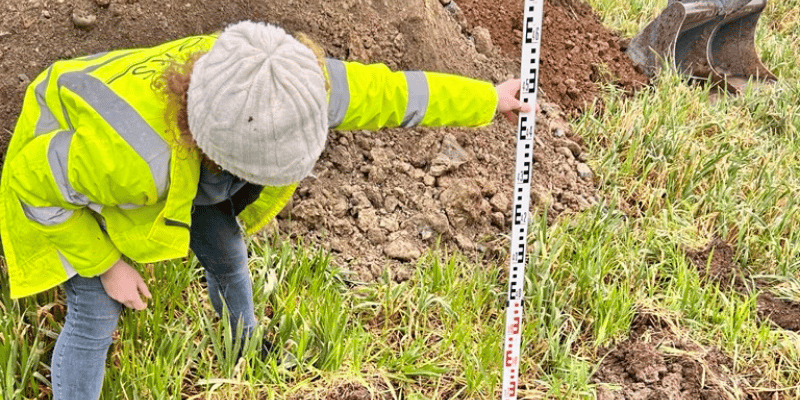
A Waste Characterisation Assessment (WCA) evaluates the properties of excavated soil and stone to inform its waste classification and identify suitable recovery or disposal options. In Ireland, it helps developers and contractors plan how these materials can be managed at appropriately authorised facilities.
Where a by-product declaration is not possible and excavated soil and stone must be removed from a development site as waste, a WCA informs the appropriate management route before transportation to an authorised facility.
The assessment helps determine whether the material is suitable for recovery at a soil recovery facility or disposal at an inert, non-hazardous or hazardous landfill, subject to the receiving facility’s authorisation and acceptance requirements.
Why is a Waste Characterisation Assessment Important?
The classification of excavated soil can have a major impact on project costs.
For projects generating large volumes of excavated material, even a small change in waste classification can significantly affect overall project spending.
A WCA ensures that soils are being managed in accordance with Irish Waste Management Legislation while helping developers, contractors and project managers make informed decisions at an early stage.
What are the Stages of a Waste Characterisation Assessment?
A Waste Characterisation Assessment typically comprises three key stages:
1. Hazardous Waste Assessment
The first stage evaluates the chemical composition of the soil to determine whether it exhibits hazardous properties in accordance with the Environmental Protection Agency (EPA) Guidelines on the Classification of Waste (2019). This is typically undertaken using HazWaste Online Classification Engine to determine if its hazardous.
Laboratory analysis is undertaken to assess contaminants such as metals, hydrocarbons, asbestos, PAHs and other relevant parameters depending on the site’s history and ground conditions.
2. Waste Acceptance Criteria (WAC) Assessment
If the material is classified as non-hazardous, Waste Acceptance Criteria testing is undertaken in accordance with Article 16 of the EU Landfill Directive 1999/31/EC Annex II which establishes criteria and procedures for the acceptance of waste at landfills.
This stage helps determine whether the material is suitable for acceptance at inert, non-hazardous or hazardous landfill facilities.
3. Soil Recovery Facility Assessment
Where appropriate, the soil may be assessed against EPA guidance for acceptance at Soil Recovery Facilities (SRF).
An SRF assessment reviews a range of parameters including metals, hydrocarbons and other contaminants to determine whether the material may be suitable for recovery rather than landfill disposal.
What information is needed to start an assessment?
Useful information includes the site location, previous land uses, estimated excavation volumes and depths, and any existing ground investigation reports or laboratory results. Details of the construction programme and proposed receiving facility also help establish the appropriate assessment scope.
What are the Benefits of Early Assessment?
Undertaking a Waste Characterisation Assessment during the planning or early construction phase can provide several benefits:
- Improved cost certainty for excavation works.
- Identification of suitable recovery and disposal options.
- Reduced risk of programme delays during construction.
- Compliance with Irish waste legislation.
- Opportunities to maximise material recovery and minimise landfill disposal.
How much does a waste characterisation assessment cost?
The cost depends on the site conditions, number of samples, laboratory testing required and reporting scope. Existing investigation data may help inform the assessment, although its suitability must be checked. Providing site information and estimated excavation volumes allows a project-specific quotation to be prepared.
How Can ORS Help?
The ORS Environmental team (contaminated land pillar) provides Waste Characterisation Assessments for different types of projects throughout Ireland.
If your project will generate excavated soil and stone, engaging with a WCA at an early stage can help avoid unexpected costs and ensure materials are managed responsibly from the outset.
To learn more about how ORS can support your project, contact our Environmental team at info@ors.ie or call +353 1 524 2040.